Real Estate Branding Services: How PPC and Design Work Together to Win High-Intent Buyers
Real estate marketing has two jobs that most agencies treat as separate problems: get the right people to click, and make sure what they see when they land is good enough to convert them. Handle only one half of that equation and you end up either wasting ad spend on traffic that never converts, or sitting on a beautiful brand that nobody ever sees. Malik Tech Solutions builds both halves as one connected system specialized PPC campaigns paired with elite visual branding so every dollar spent on traffic is backed by a brand that’s actually worth remembering.
The dual strategy is what a true real estate branding service should embody in today’s world. It’s not about a logo or about having an account for advertisements, but about having a complete pipeline that turns a stranger into a qualified lead.
Why Cold Traffic Is a Losing Strategy for Realtors
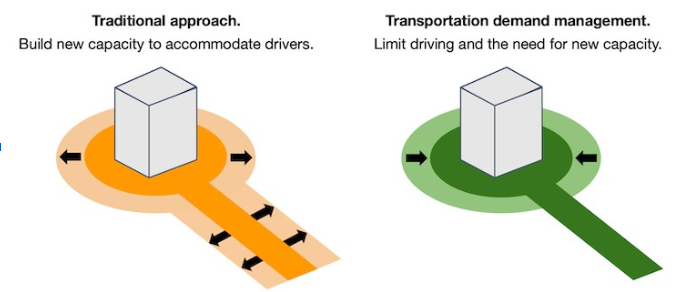
There are many firms that approach PPC as a numbers game; place bids on broad keywords, attract clicks, and try to see how many actually convert. This type of approach wastes money on individuals who have no intent of purchasing, selling, or investing in any way.
A unique PPC campaign for real estate is quite the reverse. Its purpose is to identify and target individuals based on the exact point in which their search shows intent. The person searching for “downtown luxury condos for sale” is a much more qualified lead than an individual simply viewing real estate articles.
The components of a true PPC campaign include.
Hyper-targeted competitor conquesting.
Strategic bidding based on exact specifications of the property within the local area ensures visibility on the first page right away against competing brokers, while traditional SEO methods proceed in the background.
Multi-tier display and retargeting loops.
Specialized multi-channel remarketing funnels ensure that the images of luxury properties appear before prospects browsing premium news and real estate sites.
Custom lead-capture conversion engineering.
A click is worth nothing unless it drops on something designed to convert. A landing page that’s been created to convert people into sign-ups at maximum speed is usually the one thing that makes or breaks an entire marketing campaign.
All this doesn’t matter much if what the clicker sees is generic looking. It’s the part that some PPC agencies secretly skip.
What Separates a Real Estate Branding Company From a Generic Design Shop
Here’s the harsh reality: You could do impeccable targeting and an outstanding bidding process, but once your client lands on a page that looks like it was made from a pre-existing template, you’ve lost them before you can say “hello.” When it comes to luxury markets or high-net-worth clients, the aesthetics of being cheap are simply not enough to create any form of positive impression.
And that’s what partnering with a real estate branding agency achieves for you. Your visual presence speaks of your professionalism, which tells your buyer or investor that since so much effort was spent on branding, then your business is bound to be the same in the actual transaction.
A reputable branding agency should provide you with:
Cinematic presentation and investor pitch decks.
Rough floor plans, mock-up architectures, and financial data are then polished up to form modern-looking diagrams that would catch the eyes of investors during the fundraising process, an important tool for attracting money.
Premium interactive social media assets
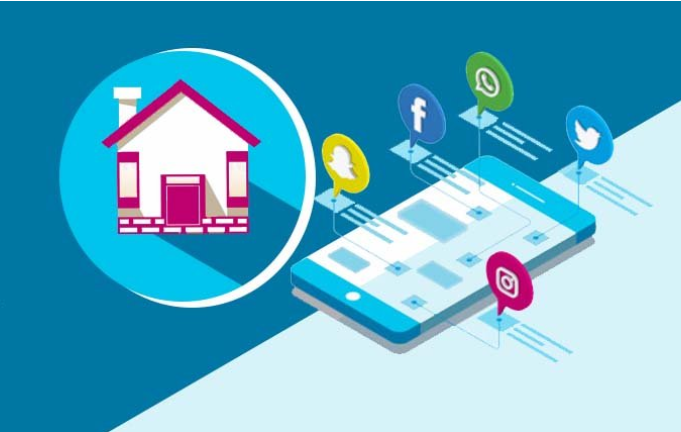
Graphics that are designed for engagement, rather than purely for aesthetics, go right into the social media strategy and make the passive browser into an active lead.
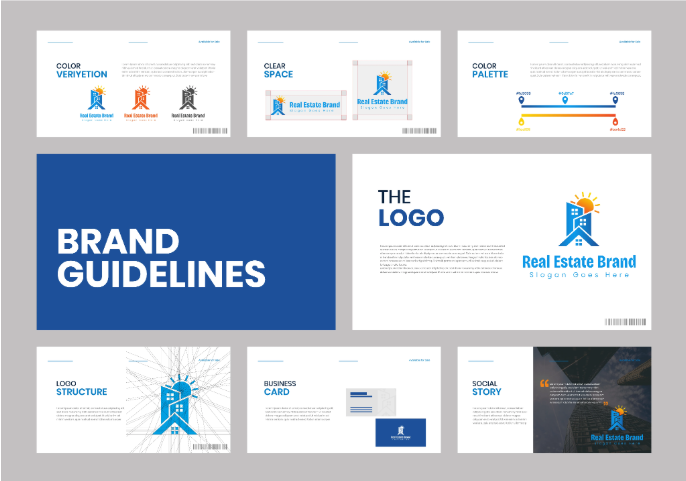
Brand identity design for uniformity.
Logos, typographic systems, and color palettes create a unified brand image that goes into every point of contact, a design that is also well-suited to the performance dashboards and analytics tools, ensuring the quality of reporting to match the quality of the design itself.
When pay per click and branding work together in this manner, cost per lead goes down because the visitor has what was promised to them by the ad. The design conveys more trust because it is a deliberate design rather than a coincidence. The premium nature of the brand becomes obvious and can justify the premium price tag.
What a Complete Real Estate Branding Package Should Include
However, many companies offer “branding” in an undefined, blanket form that can be purchased as an afterthought. But a successful branding package for real estate needs to work more like infrastructure, interconnecting and feeding into the next piece of it, instead of selling individual pieces that don’t connect.
Minimum requirements for such a package include:
- Paid search strategy focusing on local, intent-driven keywords, not broader, expensive keywords that attract the wrong crowd.
- Landing pages designed natively to convert, not adapted to fit from some generic template.
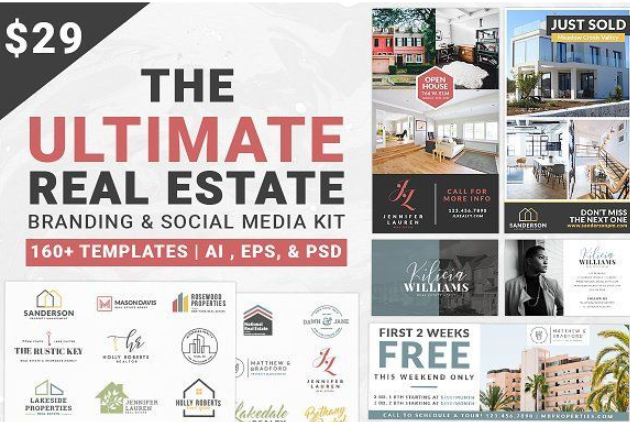
- Visual identity components – systems of logos, typography, color palettes – consistent across all channels, from Google AdWords to Instagram carousel posts.
- Investor and presentation materials ready to withstand a pressure-filled meeting, not just looking good online.
- Social media graphics optimized for engagement metrics, not just for looking pretty.
- Analytics integration provides a single source of truth for each campaign, each click, each conversion.
This is not only about convenience but rather consistency. When the prospects see the same design elements on a Google ad, landing page, brochure, and social media ad, they create recognition. With recognition, there is trust, and with trust comes business.
How to Evaluate Agencies for Real Estate Branding
Not all marketing firms
Do they get transactional intent?
Can they demonstrate integrated work, rather than disparate services?
Do they design to speak to the local market, rather than the platform?
Does their visual design really elevate, or is it merely "clean"?
Do they report results transparently?
Great partners think of branding and performance marketing as two sides of the same coin.
Bringing PPC and Branding Together
The way real estate marketing is conducted has undergone a dramatic shift in recent years. Consumers today are much more critical of brands and make decisions quickly about whether or not to pursue a business after viewing an advertisement or landing on a web page. In order to be successful in this type of environment requires more than just strong bidding, a catchy logo, or an innovative advertising approach; it requires an integrated approach in which paid search, conversion design, and visual identity are working together to communicate the same message.
The underlying concept for “paired” PPC management and premier creative execution under one roof is that high-intent traffic brings potential buyers to your real estate offering, strong branding makes those potential buyers want to engage with your real estate offering, and a well-defined real estate branding package ensures that all of the marketing touchpoints (from Google Advertisements to an Investor Deck) feel as though they are part of the same high-quality brand.
For Realtors, Brokers, and Developers competing in highly competitive, high-value markets, the type of integration described above is no longer just an option; it has become the minimum requirement for anyone wanting to convert attention into actual sales. This expectation is exactly what you should expect from every real estate branding agency you partner with.
If you feel as though your marketing is currently fragmented (i.e., some advertisements here, a logo there, and etc.), this may indicate that it is time for you to create a more complete and coordinated strategy.